COVID-19 Can Awaken Hidden Viruses Throughout the Body, UT-Led Study Finds
Researchers say dormant viruses many people harbor can reactivate during COVID-19 and may be linked to long COVID symptoms.
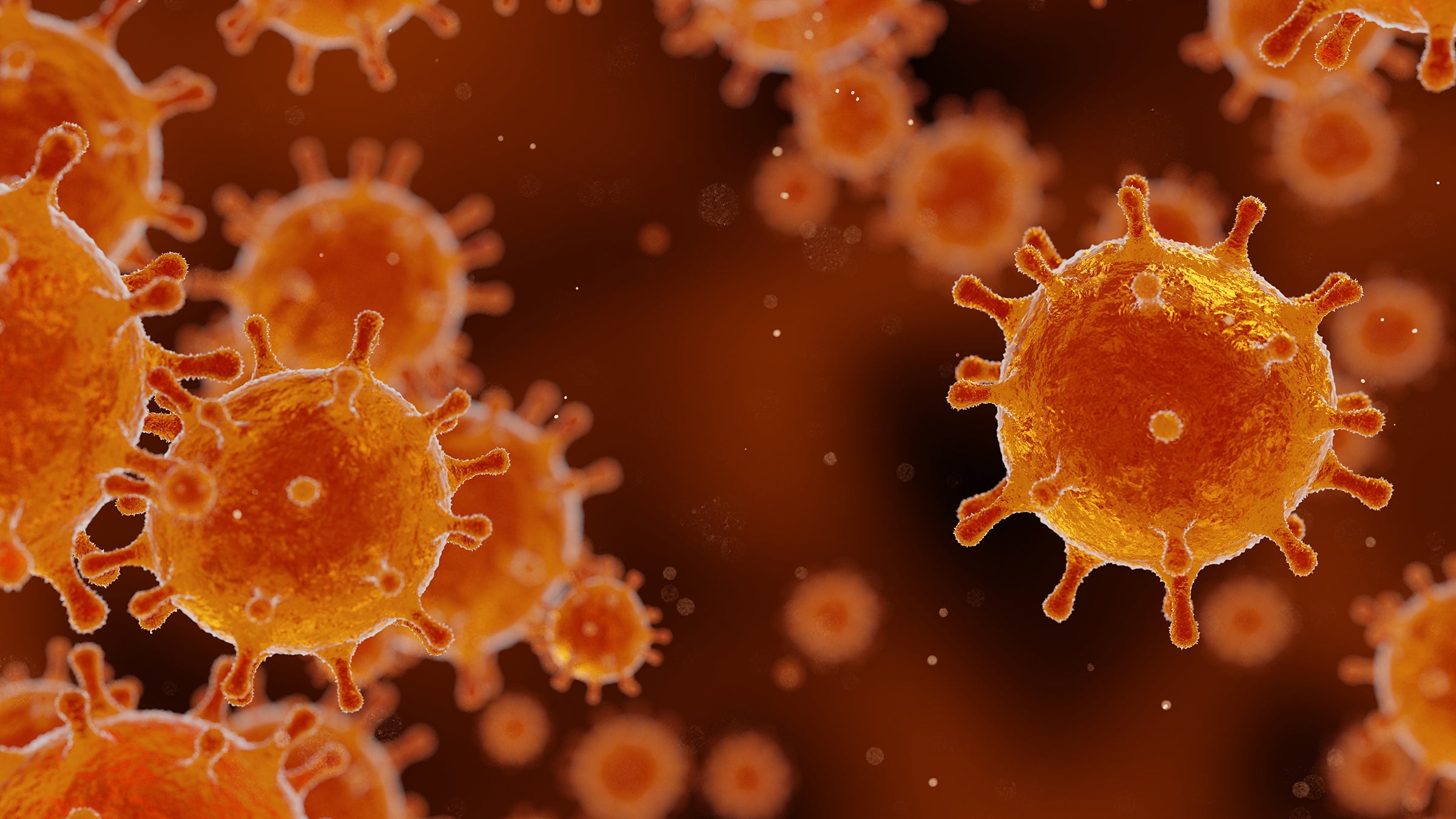
COVID-19 can awaken dormant viruses that lie hidden in the body for life, even in people with otherwise healthy immune systems, according to a study of more than 1,100 hospitalized patients published today in Nature. The work, led by researchers at Dell Medical School at The University of Texas at Austin in collaboration with Lauren Ehrlich, a professor of molecular biosciences at UT, and a national research consortium, points to a hidden consequence of COVID-19 that could reshape how physicians understand severe infections.
These dormant viruses are common and include Epstein-Barr virus, which causes mononucleosis, along with other related viruses in the herpes family, all of which can reawaken during periods of illness and stress. The study found that nearly half of patients had at least one such virus reactivate during their COVID-19 illness. Researchers also discovered that reactivation was more common in sicker patients and was associated with a range of serious health complications, longer hospital stays and death.
“This finding suggests that COVID-19 may not always act as a single viral infection and may disrupt the body’s internal ecosystem of dormant viruses, creating a state of ‘dysvirosis,’” said lead author Cole Maguire, a neuroscience graduate student and medical student in the lab of Esther Melamed, M.D., Ph.D., in the Dell Medical School.
Viral reactivation has been observed previously, but doctors thought it mainly occurs in people whose immune systems are suppressed. One of the most surprising findings of this study was that reactivation often occurred in people who were healthy before developing COVID-19 and was not limited to those with suppressed immune systems. This result suggests that viral reactivation may be more common than previously thought and may contribute to worse health outcomes in otherwise healthy people.
“Our findings have important implications for patient care. Tests already exist for several of the chronic viruses studied, and some viruses in the herpes family can be treated with existing antiviral drugs,”said Melamed, the study’s principal investigator and assistant professor of neurology at Dell Medical School, also appointed in the Department of Neuroscience. “The next step is determining whether identifying and treating reactivated viruses can improve outcomes for patients with acute COVID-19 and long COVID.”
Long COVID remains one of the most challenging consequences of COVID-19, affecting millions worldwide with fatigue, cognitive impairment and physical disability months or even years after infection. Its causes remain incompletely understood, and there are currently no approved treatments. The research team found a viral signal of Anelloviridae, a lesser-known family of chronic viruses, appearing more often in long COVID patients with lasting fatigue and reduced physical function. Although the study does not prove that viral reactivation causes long COVID, it provides strong evidence that dormant viruses may contribute and could help researchers better understand and eventually treat the condition.
The patients in the study were hospitalized, unvaccinated and mostly infected early in the pandemic, so it’s not clear yet whether the same patterns hold with today’s variants and widespread immunity. Even so, by revealing how COVID-19 disrupts the body’s hidden viral ecosystem, the researchers believe this work opens a new direction for understanding severe infections and for developing future strategies to prevent some of their most devastating complications.
The work aligns with a broader effort to build UT’s integrated academic health system, anchored by Dell Medical School, where research can move quickly from biological insight to better ways of diagnosing, monitoring and caring for patients.
The study was done in collaboration with the National Institutes of Health-funded Immunophenotyping Assessment in a COVID-19 Cohort (IMPACC) consortium, a national study funded by the National Institute of Allergy and Infectious Diseases, part of the NIH. The consortium included investigators from over 15 universities across the United States.
Media contact: Adria Johnson, Dell Medical School, The University of Texas at Austin; adria.johnson@austin.utexas.edu